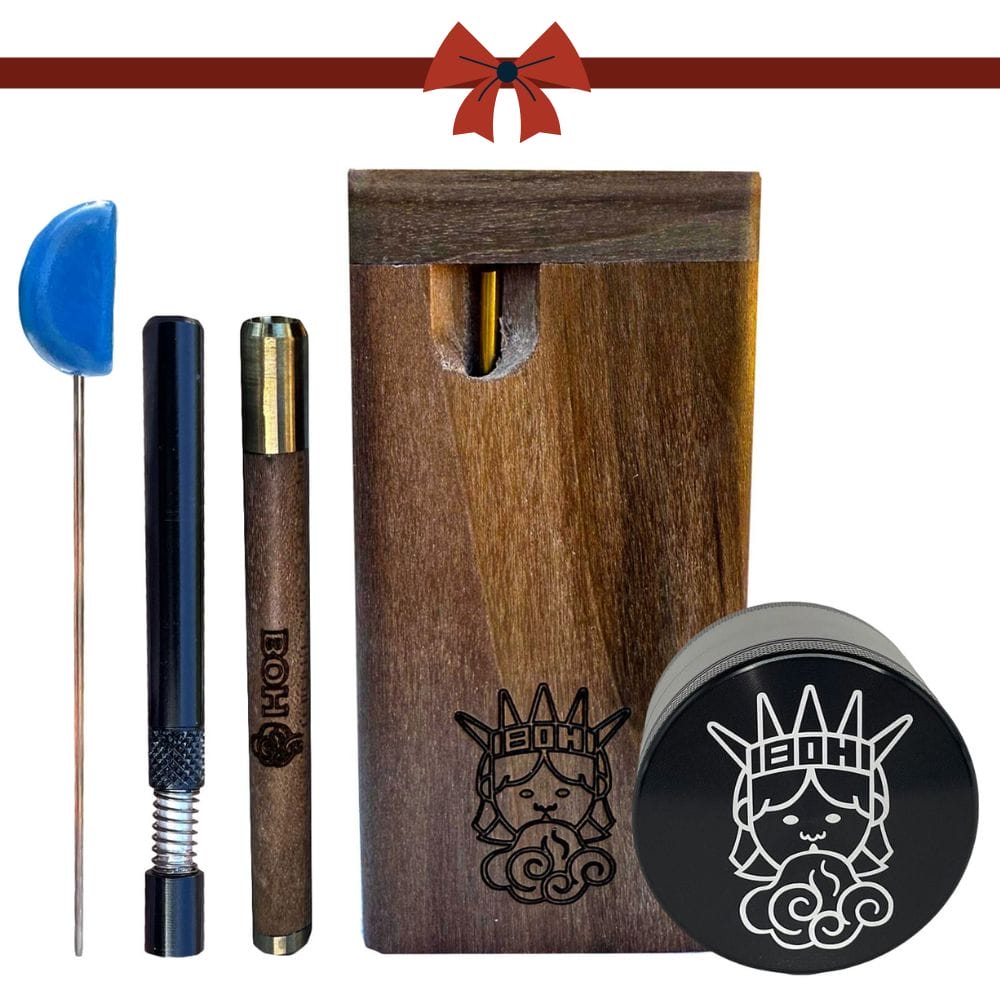
Ask most people why a dugout one hitter saves money and they’ll point to the price tag: a $25 dugout beats buying papers or a bowl every month, right? That’s part of it, but it’s not the real reason. The actual savings come from something most people never think about — portion control. A one hitter is built to hold a single, small draw, and that built-in limit is what quietly cuts your herb spending over time, since herb (not the accessory) is the expense that adds up.
Below we’ll walk through the real math: the one-time cost of a dugout setup versus the ongoing cost of rolling or packing bowls, why over-packing is the silent budget killer, and roughly how long it takes a dugout to pay for itself. We’ll also point you to the specific setups that make the most financial sense at every price point.
Our Picks: Best Dugout Setups for Maximum Savings

Best Ultra-Budget Entry: Walnut One Hitter Box
The cheapest way into a complete dugout and bat setup on the site right now. If you’re switching over just to test the savings, this is the lowest-risk way to do it.

Best Long-Term Value: Titanium One Hitter Bat
Titanium doesn’t crack, chip, or wear out the way glass or wood can. Paying a bit more up front for a bat you’ll never have to replace is its own kind of savings.

Best All-In-One Kit: Padauk Dugout with Built-In Poker
No separate poker to buy or lose. Everything you need is built into one $38 piece, which is cheaper than buying a dugout, bat, and poker as three separate purchases.

Best Sale Pick: Classic Wooden Dugout — Mahogany
Currently marked down from $32 to $25, so you’re getting a full-size mahogany dugout and bat for close to entry-level pricing while the sale lasts.

Best Grab-Bag Value: Mystery Box Dugout
A random in-stock dugout and bat at a flat $28 price. If you just want a complete setup at a fair price and don’t care which wood you get, this is the easiest way to save on deciding.

Best Upgrade Add-On: One Hitter Bowl Attachment
Screws onto your existing bat to turn it into a small bowl for the rare occasion you want more than one hit, without buying a whole separate pipe.
The Real Cost Comparison: Dugout vs. Rolling vs. Bowls
On paper, all three options look similarly cheap up front. A pack of rolling papers runs about $2, a 50-pack of pre-rolled cones is around $21, and a basic smoking bowl or pipe starts around $13 to $21. A complete dugout and bat setup costs more up front, usually somewhere between $22 and $38 depending on the wood and whether it includes a built-in poker.
So if you’re only comparing sticker prices, rolling looks cheapest and a dugout looks like the most expensive option. The comparison changes completely once you factor in what actually costs money over time: the herb itself, not the paper or the pipe.
Why Portion Control Is the Real Money-Saver
A one hitter is designed to hold a single small draw — enough for one hit, not a whole session. That’s the entire mechanism behind the savings. When you roll a joint or pack a bowl, it’s easy to use two or three times as much herb as you actually need, especially if you’re not paying close attention or you’re sharing with friends. A one hitter physically can’t hold that much, so every session uses only what you meant to use.
Over weeks and months, that difference adds up in a way the price of papers or a pipe never will. If a one hitter uses roughly a quarter to a third of the herb a packed bowl or a joint does per session (a commonly cited rule of thumb, though actual savings depend heavily on your own habits), the accessory pays for itself out of herb savings alone, often within the first few weeks of regular use.
The Hidden Cost of Rolling: Papers, Waste, and Time
Rolling looks cheap because papers themselves cost almost nothing. But a joint is hard to portion precisely, is easy to over-pack, and burns unevenly if it’s rolled loose or too tight, which wastes herb as ash and smoke you don’t inhale. A rolling tray and a stack of papers or cones add up to real money over a year even before you count what’s lost to uneven burning, and rolling well takes practice most people never quite get around to.
The Hidden Cost of Bowls: Over-Packing and Resin Waste
Bowls have the opposite problem. Because there’s no built-in portion limit, it’s genuinely difficult to pack a “small” bowl — most people fill the whole chamber out of habit, then don’t finish it in one sitting. What’s left either gets relit later (harsher, less flavorful) or sits and dries out. On top of that, resin builds up inside a bowl faster than inside a slim one-hitter bat, and that resin is unsmoked herb stuck to the walls of the piece rather than in your lungs.
How Long Until a Dugout Pays for Itself
The exact break-even point depends on how much you smoke and how much herb costs where you live, but the shape of the math is consistent: a $24–$38 dugout and bat setup is a single purchase, while rolling or bowl-packing carries an ongoing herb cost that’s structurally higher per session. Most regular users who switch to a dugout report using noticeably less herb within the first couple of weeks, simply because the format no longer allows over-packing. From there, every session is pure savings compared to what the same herb would have cost rolled or bowled.
Maintenance = More Savings
A dugout only keeps saving you money if you take care of it. Built-up resin in the herb chamber can make your bat harder to load cleanly, and a sticky spring-loaded lid is more likely to spill herb you’ve already paid for. Our full guide to cleaning a one hitter dugout covers the basics, but the short version is: a dry brush or soft cloth regularly, and avoid dunking wood in alcohol.
Dugout Savings FAQ
Does a dugout really save money compared to rolling?
Yes, but not because of the price of papers versus the price of a dugout. The savings come from the one-hitter format naturally using less herb per session than a rolled joint or a packed bowl.
How much herb does a one hitter actually use per hit?
It varies by bat size and how tightly you pack it, but a single draw is meaningfully smaller than what most people load into a joint or bowl, which is the whole point.
Is a more expensive dugout worth it if I’m trying to save money?
Often yes. A titanium or built-in-poker setup costs more up front but lasts longer and needs fewer add-on purchases, which can work out cheaper over a year than replacing a cheaper piece.
Do I still need rolling papers or a bowl if I have a dugout?
Not for daily use, though plenty of people keep a backup bowl or a pack of papers around for social situations or sharing.
Shop All Dugout Setups
Ready to see the savings for yourself? Browse our full dugout one hitter collection to find a setup in your budget, check out our wood guide if you’re choosing between finishes, or see our grinder buying guide and gift guide to round out your setup.